Categories
media

Financial Standard

Return To Office

The commercial property sector took a beating thanks to pandemic-era lockdown laws and was given little reprieve as interest rates started climbing, but as more employees return to the office will we also see the return of returns?

Workers have been returning to the office albeit taking a more hybrid approach for some time now. But with the New South Wales government recently announcing public sector workers are expected to primarily work from an approved office location, it seems as though the commercial property sector will be one to benefit.

According to research from Colliers, occupier activity across national CBD offices has been showing resilience in the face of economic challenges, with the national CBD vacancy rate sitting at around 14% over the second half of 2023.

This is a positive sign for a sector that has struggled over the past couple of years. In 2022 global listed real estate returns were around -20%, Justin Blaess, portfolio manager at Quay Global Investors says.

REIT underperformance began in 2022 as the US Federal Reserve and other central banks raised rates to combat infation. Higher rates led to higher discount rates and higher borrowing costs which pressured listed REIT performance for the better part of two years.

“We went from easy money in a zero-interest rate policy environment to quickly switching to very restrictive policy,” Blaess says. “That hit hard. Not just for the required return you need from an investment, but also the expected return.

“Real estate is a longer-duration investment, so it got hit hard and was probably one of the worst performing sectors in 2022.

Then 2023 came around and there was no change in central bank attitudes, so 2023 was very volatile.”

Despite suffering through some drastic years, Blaess says the market has started to take pause now.

“As we started this year, central banks and the market began to walk back expectations around the magnitude and timing of expected interest rate cuts. So, we got to June 30 and our total return was nothing,” he says.

“But by the time we get to July, our returns were up 6% as central banks started to talk about cuts again, so the big theme determining returns has really been interest rate policy, and the correlation between the US bond yield.”

As Blaess points out, the real estate sector can be tumultuous because these major swings in returns were not due to interest rates actually changing, but rather whether people thought they might.

“If you actually look at the fundamentals, they haven’t been too bad. Companies are growing their rents, economies haven’t collapsed, no one has gone into a recession yet,” he says.

“So, occupancies are growing, and rents are being paid. It hasn’t been too bad. There has just been some erosion at the margin as higher interest rates have made their way through.”

And while higher interest rates can have a negative effect, the cause of those higher interest rates being inflation, can actually help property assets thrive.

Grant Berry, SG Hiscock portfolio manager, says property assets that tie rent to inflation actually benefit from the more disruptive environment.

“If you think about owning a shopping centre and your rent is tied to inflation, it’s a pretty good asset class to hold during the cycle,” Berry says.

“It’s going to depend on the investor and their tolerance for risk, but time says it is about being in the market rather than trying to time the market.”

Berry says it is likely we are at the peak of the global interest rate cycle now, and while the Australian central bank may lag the US when it comes to cutting, it doesn’t really matter so much in terms of commercial real estate.

“Short-term rates is not how we price stocks, we price stocks on inflation-linked bonds. If you go back to 2021 they were -1%; they’ve now moved up to 1.9% which is actually higher than we have seen for over a decade,” Berry says.

“You’d have to go back to 2013 to get that level and I think that is a reasonable framework to invest and puts roots in a good pricing point for future returns.”

Berry says that volatility exists in every sector, and while interest rates, inflation and various other macro factors can have an impact, he warns that investors shouldn’t focus too much on looking backwards.

“There is a tendency for people to look in the rear vision mirror and then use that as their formula for investing going forward,” he says.

“But if you look at global REITs over the last seven years, they have returned around 1.1% per annum. Are those anemic returns likely to continue? We think it’s unlikely. But we’re finding good properties that we invest in on
a yield of circa 6% per annum. At that level you’re setting yourself up pretty well for reasonable returns.”

Hidden opportunity

While some investors are playing it cool, LaSalle Global Solutions chief investment officer Matt Sgrizzi believes REITs are about to experience a new “golden era”.

“We’ve become increasingly more bullish on the potential for a REIT turnaround; in fact, we believe we are at the cusp of the next golden era in REIT investing,” he says.

“We don’t think it’s only about the potential for interest rates to come down. The lingering headlines of negative bank and financing sentiment, and the ‘death of office’ narratives are easing, and office is not today’s commercial real estate universe – traditional office is less than 10% of the REIT universe today.

“Property fundamentals remain solid with an economic backdrop that should remain supportive of demand, secular demand drivers remain at work and maybe most importantly, a tailwind of declining supply in the near to medium-term.”

Sgrizzi says that as inflation slowly edges back into the Reserve Bank of Australia’s target range of 2-3%, REITs are likely to benefit. “As inflation continues to ease, financial conditions could not only become less of a headwind but potentially turn to a tailwind as we embark on a global central bank easing cycle,” he says.

“This dynamic has historically been a strong time to invest in real estate and REITs.”

And while yes, there is a consensus that the lory days of the office are returning, there are other opportunities as well.

American Century Investments vice president and portfolio manager Steven Rodriguez says the best opportunities can be found in sectors that have favourable demand trends and pricing power.

“Currently, that leads us to an overweight in data centres and health care. We continue to see opportunities in data centres as artificial intelligence and the growth in cloud computing fuel demand for computing space,” Rodriguez says. “These strong demand trends have led tohigh occupancy rates and increased pricing power for data centre operators.

“Healthcare has performed well, and we have trimmed our position, but we remain overweight based on an aging population that can fuel demand for skilled nursing and senior living facilities.”

Elanor Investors Group co-head of real estate David Burgess agrees data centres are going to be a driving force in the sector over the next few years.

“We’re going to see a real rise in alternatives in the real estate sector. A lot of the alternatives sectors in Australia are at the infancy stage; things like healthcare, data centres, self-storage,” Burgess says.

“We’re also seeing a lot of capital looking at the residential space in Australia, which is a core asset class in the US, but still in it’s infancy in Australia.”

Follow the money

Recent research has found that sophisticated and high-net-worth (HNW) investors have also been flocking to the real estate space in the current environment.

In fact, Brisbane-based fund manager Natgen recently expanded its Queensland office portfolio to keep up with strong demand from sophisticated investors for office-backed real estate assets.

“Office stock in strong regional locations has shown greater resilience during the post-COVID period. Whilst much has been made of the resetting of capital city CBD office assets world-wide due to a purported long-term mass exodus of workforces to alternative work settings, regional offices do not suffer from the same negatives. For example, travel time to regional office localities is far less than CBD locations,” Natgen managing director Steven Goakes says.

“Sophisticated investors understand the merits of property and the tax advantaged income stream it can yield. That’s why demand has been significant for this fund.”

Meanwhile, Zagga senior executive, investments and funding Erica Geddes says while investors seeking yield opportunities in commercial property may feel nervous, the sector is diverse and there are plenty of opportunities.

“While certain asset types – including multi-tenant office towers, single-tenant commercial, and highly specialised assets – may require extra scrutiny and due diligence given the current high inflation, high-interest rate environment, many sub-sectors are still performing well,” Geddes says.

“As a commercial real estate debt (CRED) manager, we’re focused on high-grade assets in the deepest and most liquid markets. Assets such as mixed-use commercial, boutique office, small-scale industrial, childcare centres, and non-discretionary retail are the most understood and well received by investors.”

Geddes says astute investors are aware of the opportunities in the CRED market and says there has been a growing number of HNW individuals jumping on the bandwagon.

“The search for reliable, risk-adjusted income has seen many investors turn to CRED for its unique attributes, which can provide a diversified, defensive layer to investment portfolios while also hedging against rising infla-
tion. This is especially the case post-COVID, given inflationary conditions and volatile asset prices,” she says.

“Property investors, more broadly, are also switching from capital investment to debt-funded income investments, owing to unfavourable market conditions.”

Geddes says institutional investors are also getting in on the game with many showing preferences for shopping centres, build-to-rent, industrial and other commercial asset types that are benefitting from the tailwinds of rising population growth and the housing shortage – in short, investments that tend to pay regular returns.

She says the CRED sector is being driven by a substantial shortage in residential dwellings and building approvals, and it’s unlikely that will change any time soon.

“Australia has experienced material population increases over the last 10 years (23 million to 27 million) but is experiencing the same building approval levels (13,000-15,000 per year),” she says.

Geddes adds that regulatory requirements, such as Basel III, make it difficult for banks to compete effectively in certain market sectors, such as construction and project finance.

“This has allowed non-bank lenders to cherry-pick opportunities with favourable risk dynamics, underpinned by high-grade assets, that would traditionally have gone to the major banks,” she explains.

Hedging your bets

While Geddes points out that the real estate sector has many facets, it’s not surprising that when market volatility hits, investors across all sectors get spooked.

We witnessed this at the start of August when the ASX suffered its worst day since March 2020 with $102 billion wiped out in a single trading day. And while the market recovered in a matter of days, it’s still a good example of human nature.

The global market wipe out was spurred by mediocre jobs data in the US that sparked recession fears thanks to the Sahm rule. The rule holds that a recession is likely underway if the three-month average of the unemployment rate rises by half a percentage point in a year.

While the Sahm rule has been an effective indicator, many experts agreed the subsequent global sell-off was a little premature.

Burgess says the market volatility was a good example of why holding some real estate in your portfolio can protect you.

“Market volatility can actually assist in returning a focus to hard assets,” Burgess says.

“The market volatility resulted in the forward yield curve coming down significantly, which makes funding for hard assets a lot cheaper.”

Burgess says – despite a tough few years – it is a good time for investors to consider coming back to real estate.

“Whether it be now or in 12 months, I think we are in the latter parts of the downturn. We’ve had a couple of years of this material downturn, and generally speaking it’s a cyclical sector,” he says.

“You can never pick the bottom, but I would think we are at the latter stages of this downturn. This is probably the third real downturn that we have seen over the last 30 years in commercial real estate, and that would suggest this is a buying opportunity.”

Eliza Bavin

Article source

Categories
media

The Daily Telegraph

Building sale underpins investor confidence in Cairns CBD

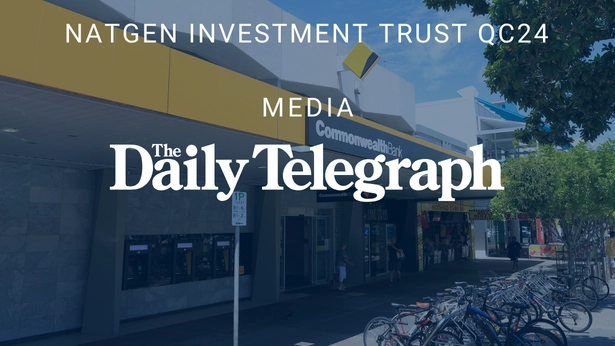
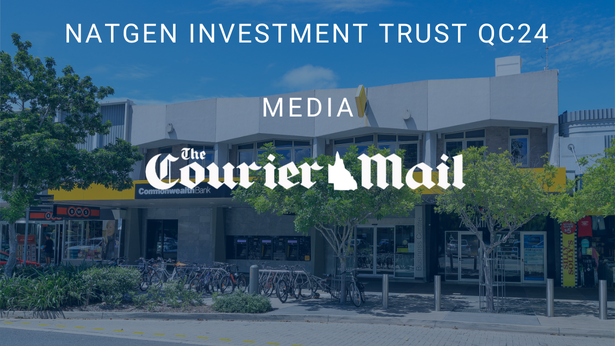
A Cairns city building that’s been home to the Commonwealth Bank since its construction in 1991 has sld for a seven figure sum.

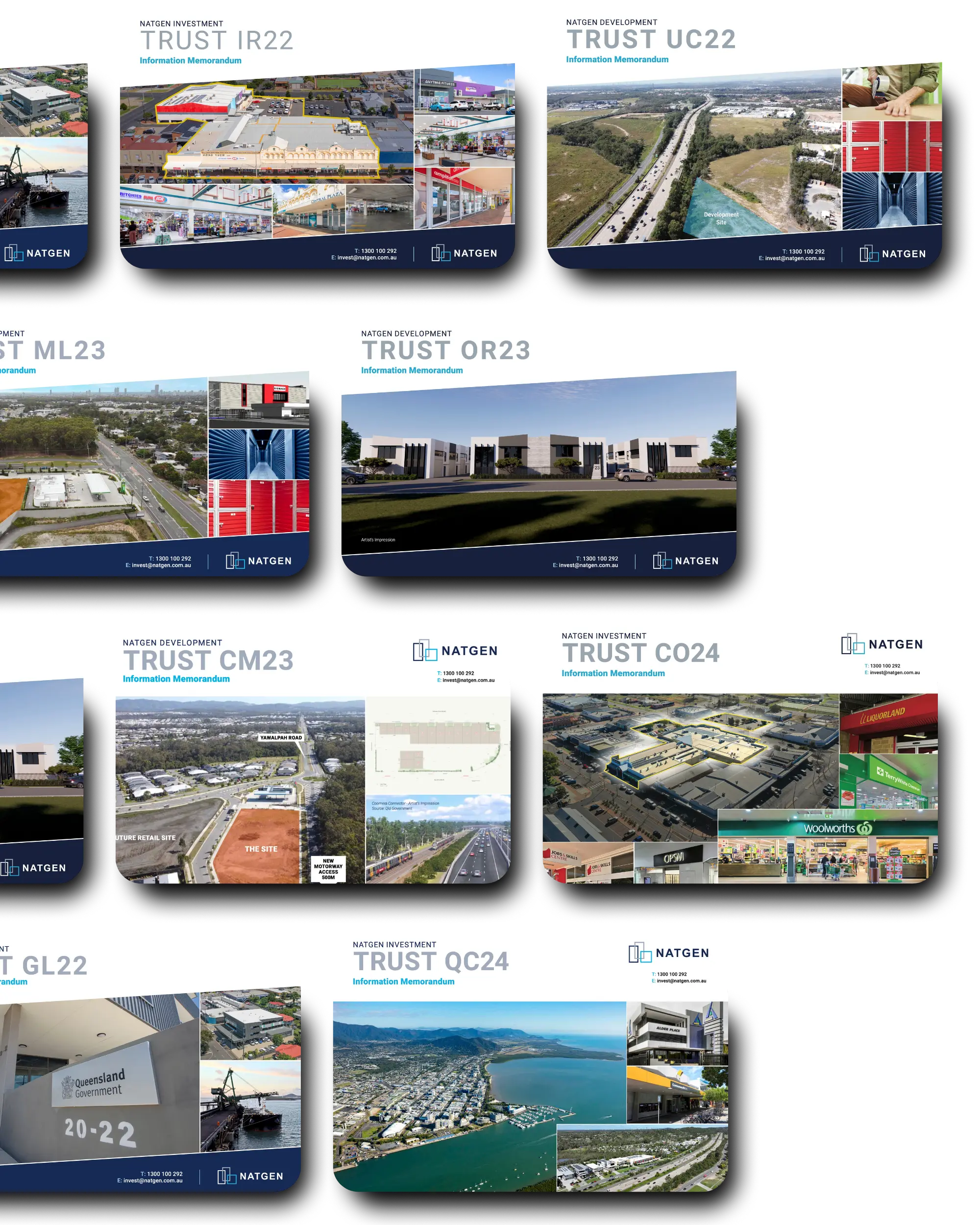
Brisbane-based property fund manager Natgen has increased its Queensland office portfolio with the successful acquisition of the Lake St building for $5.25m.

Acquired for Natgen Investment Trust QC24 after being on the market for six weeks, the two-storey CBD office and retail building is home to the sole Cairns branch of the Commonwealth Bank along with smaller office tenancies on the upper level.

Natgen managing director and responsible manager Steven Goakes said the company would actively manage the trust for an anticipated five to six years.

“Natgen’s acquisition strategy for this trust is to buy office assets in prime locations in regional cities of Queensland,” he said. “Our income trust investors want long-term income returns and capital growth prospects, and we think that 76 Lake St offers both. We are happy to keep CBRE Cairns as the manager of the building and work with them to implement our planned building enhancements.”

Post-pandemic, Mr Goakes said Queensland continued to benefit from ongoing population growth, together with the attraction of lifestyle destinations within coastal areas such as Cairns.

He said the exodus of workers from metropolitan city centres was not a trend in the wake of Covid at smaller regional centres as workers in the big cities look to alternative work settings to avoid an often lengthy commute to work.

“Travel time to regional office localities is far less than (metro city) locations,” he said.

“Despite modern work habits, the office remains the main workplace for many workers and is far from obsolete.”

The most regionalised state in the nation, Queensland has important business centres stretched along the coast, from the Gold Coast in the south to Cairns in the Far North, according to Natgen.

The Commonwealth Bank building was sold by Hyatt Property (Cairns) Pty Ltd after being acquired from Mineral Resources Lihir Pty Ltd for $4.2m in 2020.

Peter Carruthers

Article source

Categories
media

Cairns Post

Trust buys CBD building

Two-storey occupied by bank

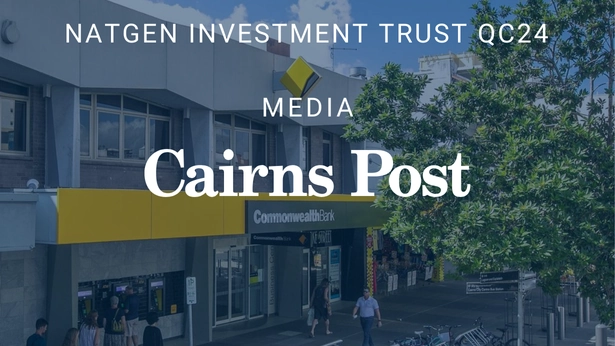
A Cairns city building that’s been home to the Commonwealth Bank since its construction in 1991 has sld for a seven figure sum.

Brisbane-based property fund manager Natgen has increased its Queensland office portfolio with the successful acquisition of the Lake St building for $5.25m.

Acquired for Natgen Investment Trust QC24 after being on the market for six weeks, the two-storey CBD office and retail building is home to the sole Cairns branch of the Commonwealth Bank along with smaller office tenancies on the upper level.

Natgen managing director and responsible manager Steven Goakes said the company would actively manage the trust for an anticipated five to six years.

“Natgen’s acquisition strategy for this trust is to buy office assets in prime locations in regional cities of Queensland,” he said. “Our income trust investors want long-term income returns and capital growth prospects, and we think that 76 Lake St offers both. We are happy to keep CBRE Cairns as the manager of the building and work with them to implement our planned building enhancements.”

Post-pandemic, Mr Goakes said Queensland continued to benefit from ongoing population growth, together with the attraction of lifestyle destinations within coastal areas such as Cairns.

He said the exodus of workers from metropolitan city centres was not a trend in the wake of Covid at smaller regional centres as workers in the big cities look to alternative work settings to avoid an often lengthy commute to work.

“Travel time to regional office localities is far less than (metro city) locations,” he said.

“Despite modern work habits, the office remains the main workplace for many workers and is far from obsolete.”

The most regionalised state in the nation, Queensland has important business centres stretched along the coast, from the Gold Coast in the south to Cairns in the Far North, according to Natgen.

The Commonwealth Bank building was sold by Hyatt Property (Cairns) Pty Ltd after being acquired from Mineral Resources Lihir Pty Ltd for $4.2m in 2020.

Peter Carruthers

Article source

Categories
media

Property Buzz

Brisbane fund manager expands Queensland office portfolio amid strong investor demand

Brisbane-based fund manager Natgen has expanded its Queensland office portfolio, acquiring $14.25 million worth of properties in Cairns and the Gold Coast.

The expansion comes in response to strong demand from sophisticated investors for a property-backed fund targeting initial monthly distributions of 9.02% per annum.

Natgen Managing Director Steven Goakes said: “We were attracted to these assets as they fit with our strategy of regional office assets in prime locations, with desirable economic fundamentals.”

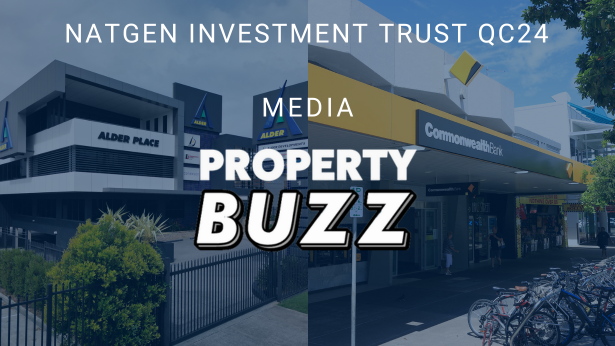
The newly acquired properties include:

  • A two-storey CBD office and retail building in Cairns, purchased for $5.25 million
  • A three-storey commercial office building in Helensvale on the Gold Coast, acquired for $9 million

Goakes noted that office markets in both Cairns and the Gold Coast are experiencing historically low vacancy rates, boosting growth prospects for the properties.

“Office stock in strong regional locations has shown greater resilience during the post-COVID period,” Goakes said.

He added: “Whilst much has been made of the resetting of capital city CBD office assets worldwide due to a purported long-term mass exodus of workforces to alternative work settings, regional offices do not suffer from the same negatives.”

The fund, Natgen Investment Trust QC24, closed oversubscribed with investors contributing $9.45 million in capital.

Natgen plans to actively manage the trust for an anticipated five to six years, targeting a tax-advantaged distribution of 9.02% in the first year, rising to 9.16% in the second year, paid monthly.

The company manages a portfolio of investment and development assets across Queensland, New South Wales and Western Australia, supported by sophisticated and wholesale investors.

Article source
Categories
media

The Courier Mail

Office portfolio expands

Brisbane property fund manager Natgen has expanded its Queensland office portfolio to Cairns and the Gold Coast following the settlement of $14.25m worth of buildings for its latest property trust.

The Natgen Investment Trust QC24 paid $5.25m for the two-storey Common- wealth Bank anchored CBD office and retail building at 76 Lake St, Cairns, in a deal struck by CBRE’s Danny Betros. According to CoreLogic the property last changed hands four years ago for $4.2m.

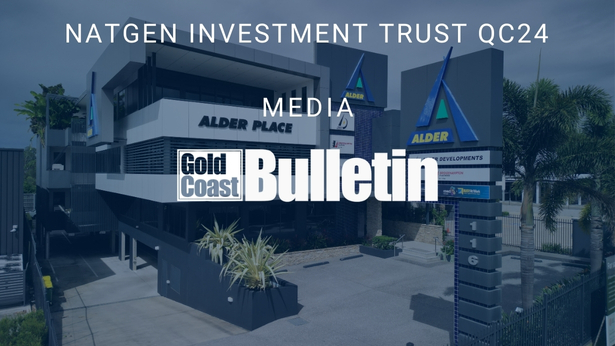
The trust also settled on the $9m purchase of the three-storey multi-tenanted office building, Alder Place, at 116 Signato Dr, Helensvale, after a campaign by CBRE’s Jack Morrison, Adelaide O’Brien and John Nucifora.

The nine-year-old building was owned and occupied by Gold Coast construction and development company Alder.

Natgen will actively manage the trust for an anticipated five to six years, targeting a distribution of 9.02 per cent in the first year of operation, rising to 9.16 per cent in year two, paid monthly.

“Natgen’s acquisition strategy for this trust is to buy office assets in prime locations in regional cities of Queensland,” said Natgen managing director Steven Goakes.

“Office stock in strong regional locations has shown greater resilience during the post-Covid period.

“While much has been made of the resetting of capital city CBD office assets world- wide due to a purported long- term mass exodus of workforces to alternative work settings, regional offices do not suffer from the same negatives.”

The Cairns building has been home to the Commonwealth Bank’s regional flag-ship branch since its construction in 1991, with a total land area of 1012sqm, total tenancy area of 1421sqm and weighted average lease expiry of three years.

Alder Place has a total tenancy area of 1478sq m, total land area of 2000sq m and a weighted average lease expiry of 5.63 years.

Mr Goakes said both properties were in localities with high long-term population and economic growth, high traffic areas and a diversity of tenancies.

Chris Herde,  Journalist

Categories
media

Gold Coast Bulletin

ALDER HQ’S $9M DEAL

Gold Coast-born construction and development company Alder has sold its Helensvale headquarters to a fund’s manager in a $9m million deal.

The 116 Siganto Drive property, built nine years ago, was bought by the Natgen group and is being put into a property trust.

The buy has been funded by an offer to investors of returns of 9.02 per cent, paid monthly, an offer that closed oversubscribed.

The fully let property is netting $668,165 a year, putting the buy on a 7.4 per cent yield.

The three-storey office building named Alder Place, which fronts the M1 motorway, will remain the Alder headquarters for at least 13 years.

The private group in 2015 won Master Builders’ regional, state and national awards for the design and construction of the building.

Alder, set up more than 20 years ago, has in excess of 100 staff and has delivered more than300 projects spanning the health, education, commercial and community sectors in Queensland and NSW.

The group has land holdings of 170ha throughout Queensland.

Alder managing director Greg Alder said Alder Place was the company’s flagship corporate HQand its sale allowed the company to satisfy its future growth plans.

“Alder created this award-winning building to ensure maximum connectivity to the M1 in both directions and to expose our brand and craftsmanship to a high number of daily commuters,” he said.

“We have chosen to sell the asset as it is one we no longer want to retain within our investment portfolio – it locks up capital for growth.”

The building is one of two being put into a Natgen trust – the other is a two-level office and retail property in Cairns.

Natgen managing-director Mr Goakes said the ability to acquire the Alder building below new replacement value underpinned the long-term value and growth potential.

“Building costs have risen precipitously in the last couple of years, which means we are able to buy good quality office buildings for significantly less than they would cost to replace,” he said.

“When we are looking for new assets for our investment trusts we seek unique opportunities in areas where we see long-term value.

“Vacancy rates are historically low on the Gold Coast, which is pushing rents up over time, and in today’s environment, where it’s not easy or cost effective to build any new spaces, we are looking down the barrel of tight vacancy levels for some time.”

QUENTIN TOD,  Journalist

Categories
media

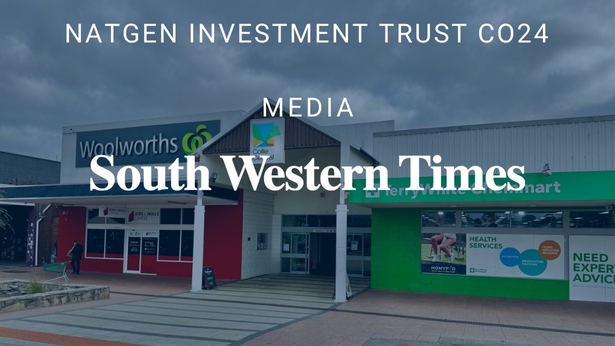
South Western Times

Queensland investment company National & General Group buys Collie Central shopping centre for $10 million

Collie’s biggest shopping complex has new owners after being bought by a Brisbane-based group for an eight-figure sum.

The Collie Central shopping centre was put on the market last year and has now found a new owner in the National & General Group after it bought the centre for $10 million.

Natgen managing director Steven Goakes said the company would be sticking to the basics in its operation.

“This is our fifth shopping centre in our portfolio so we’re getting a level of expertise in how to run them to ensure that customers are happy, and thus tenants are happy,” he said.

“Our customers are the shop owners and their customers are the shoppers so we make sure that we do with our properties whatever makes the shoppers happy.

“They might sound like silly little things but making sure the line markings in the carparks are up to scratch, making sure that the place is clean and tidy and bright and well lit, the signage is good, all these sorts of things.

“They sound like common sense, but it’s not always common practice.”

This is Natgen’s first investment venture away from the Eastern States, with the company owning trusts with properties in Queensland and New South Wales.

The company said the shopping complex — which includes a Woolworths and a Terry White Chemmart — had an average weighted lease expiry of four and a half years and a total tenancy area of 4500sqm.

Mr Goakes said Collie’s energy transition made it an attractive investment.

“The energy transition is something that I think is generally beneficial to an area, not everyone sees it that way, but we certainly see that,” he said.

“When I actually looked at Collie and the location’s attributes of that particular area of energy transition, it’s really so central to the South West Interconnected System, it’s the obvious place for things to happen.

“When you look at how much government money is going into that process of transition, it’s like watering a garden, it always produces in multiples of what they put in.

“With the amount of money that we’re seeing going into that area it’s certain the benefits will be much greater than the risks, and that’s what we’re looking for.”

Article source
Categories
media

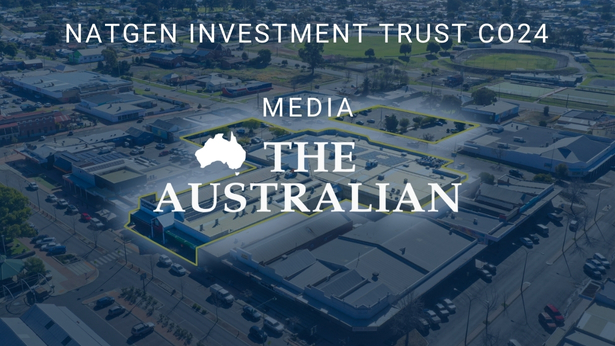
The Australian – Deals Digest

Natgen in WA venture

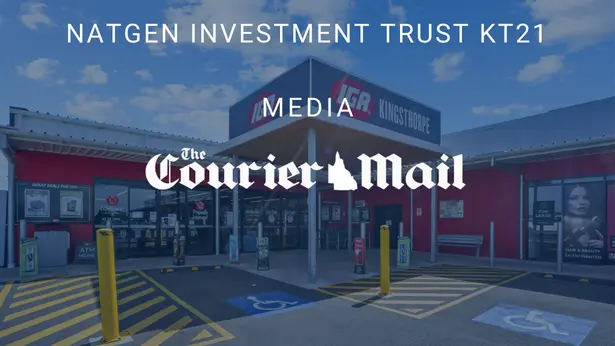
Property fund manager Natgen has expanded into WA by acquiring shopping centre Collie Central for $10m for its unlisted property trust fund, Natgen Investment Trust CO24.

The complex, about 170km south of Perth, is anchored by Woolworths and major tenants include Terry White Chemmart, Liquorland, OPSM, and a WA government office.

The centre has a weighted average lease expiry of 4.5 years and a total tenancy area of 4500sq m.

The trust raised $6.5m in equity from wholesale investors, which was combined with a $5m debt facility to fund the acquisition.

It offered a distribution of 8.5 per cent per annum over a five to six-year term, with potential for further income generation and long-term capital growth.

source: The Australian, 9th May 2024, page 9


Categories
media

The Courier Mail

Storage project ‘ideally located’

Brisbane property fund manager Natgen has increased its investments in the fast-growing Gold Coast self-storage market.

Natgen paid $5.5m for the 8084sq m site at 8 Ellis Way, Upper Coomera, for its latest property trust.

The development of a $32.8m high-specification, state-of-the-art self-storage building and surrounding facilities at the site includes more than 7000sq m of self- storage units incorporating an office/retail space, parking, security and landscaping.

Significantly, the site fronts the M1 Motorway and is part of the Coomera Springs Enterprise Park.

The trust will construct and operate the facility for a six to seven-year period following completion, and investors will contribute $10m.

Crew Commercial’s Dave Kertesz and Colliers’ Daniel Coburn and Jacob Griffin struck the deal on behalf of Gold Coast developers LatSod Pty Ltd, who own the total 3.12ha site. The acquisition follows Natgen’s recent investment in Gold Coast self- storage at Molendinar via the Natgen Development Trust ML23, with total assessed completed value of $22.9m and investors contributing $8m.

Natgen managing director Steven Goakes said the latest self-storage acquisition offered a significant opportunity for investors.

“The self-storage site at Upper Coomera is ideally located at the epicentre of a large demand area,” he said.


Categories
media

The Property Tribune

Natgen settles $4.5M land acquisition at Molendinar

  • The land is set to become a self-storage facility.
  • SEQ accounts for over a third of the nation’s upcoming self-storage stock.
  • Demand remains elevated, driven by lifestyle changes and challenging rental conditions

Brisbane-based property fund manager, Natgen, has settled a $4.5 million land acquisition that is set to become a high-specification, state-of-the-art self-storage building.

Based in the expanding central Gold Coast area, Natgen Development Trust ML23 comprises the future self-storage building and surrounding facilities at 2 Industrial Avenue, Molendinar. It is also situated adjacent to a major arterial road – the Southport – Nerang Road.

The facility will feature over 5,250 square metres of self-storage units, incorporating an office/retail space, parking, security and landscaping.

Natgen Development Trust ML23 will construct and operate the self-storage facility for a five to seven-year period following completion, with a total assessed completed value of $22.9 million and investors contributing $8 million.

The acquisition follows the success of Natgen’s previous investment in Gold Coast self-storage at Upper Coomera, with last year’s $10 million Natgen Development Trust UC22 closing fully subscribed.

Demand for self-storage high

The self-storage sector has seen a growing level of interest, with the past twelve months seeing $132 million in sales for the sector, according to data from Ray White Commercial.

One of the drivers for demand includes the housing crisis, with experts noting the challenges of securing a rental have fueled the need for prolonged storage.

The South-East Queensland (SEQ) self-storage construction pipeline is also the strongest in the country, with Ray White finding the region accounts for 36% of the nation’s upcoming stock.

Natgen Managing Director & Responsible Manager, Steven Goakes said the SEQ self-storage market offered an attractive opportunity for investors.

“Self-storage is a growth industry in Australia due to the rise of e-commerce, shrinking living spaces and sustained population growth, particularly in South-East Queensland,” Goakes said.

“The Molendinar facility’s central Gold Coast location and the strong demand factors have given us confidence in the facility’s long-term performance and our ability to maximise returns for our investors, with this type of asset also acting as a hedge against inflation.”
The Gold Coast is expected to hit one million residents by 2041, with other drivers of local sector strength including the upcoming 2032 Olympics.

According to the Urbis Self-Storage Index, self-storage occupancy rates have risen to 94.4% in outer Brisbane as of December 2021.

Revenues for the self-storage sector have surged to $1.5 billion, with annual growth of 4.4% from 2022 to 2027; the lack of feasible substitutes further supports the industry’s performance, according to IBISWorld. This has led to strong market valuations and capitalisation rates for high quality self-storage facilities, with the industry attracting increasing investor interest.

“Natgen has a strong focus on well considered, risk-managed investments that offer regular monthly income, an inflation hedge, low volatility and growth potential,” Goakes added.

“This latest acquisition provides further diversification for our investors and we look forward to completing this exciting development.”


  • Download briefing paper
  • This field is for validation purposes and should be left unchanged.


  • Download briefing paper
  • This field is for validation purposes and should be left unchanged.


  • Download briefing paper
  • This field is for validation purposes and should be left unchanged.


  • Download briefing paper
  • This field is for validation purposes and should be left unchanged.


  • Download briefing paper
  • This field is for validation purposes and should be left unchanged.


  • Download briefing paper
  • This field is for validation purposes and should be left unchanged.


  • Download briefing paper
  • This field is for validation purposes and should be left unchanged.


  • Download briefing paper
  • This field is for validation purposes and should be left unchanged.


  • Download briefing paper
  • This field is for validation purposes and should be left unchanged.


  • Download briefing paper
  • This field is for validation purposes and should be left unchanged.


  • Download briefing paper
  • This field is for validation purposes and should be left unchanged.


  • Download briefing paper
  • This field is for validation purposes and should be left unchanged.


  • This field is for validation purposes and should be left unchanged.


  • Download briefing paper
  • This field is for validation purposes and should be left unchanged.


  • Download briefing paper
  • This field is for validation purposes and should be left unchanged.


  • Download briefing paper
  • This field is for validation purposes and should be left unchanged.


  • Download briefing paper
  • This field is for validation purposes and should be left unchanged.


  • Download briefing paper
  • This field is for validation purposes and should be left unchanged.


  • Download briefing paper
  • This field is for validation purposes and should be left unchanged.